The History
The Church of Santa Maria di Valverde, annexed in the 14th century to a large Carmelite monastery, was subjected from 1633 to a transformation project conceived by MARIANO SMIRIGLIO, the first official architect of the Palermitan Senate and a leading figure in the artistic environment of the time. An event linked to the transformation of the church in the 17th century is the donation of a wealthy Genoese man, Camillo Pallavicino, following his only daughter's entry into the Valverde Monastery. The work was probably interrupted due to the death of the benefactor and at the end of the 17th century the continuation of the construction and the decorative project were entrusted to PAOLO AMATO, architect and engineer of the Palermitan Senate.
The frescoes
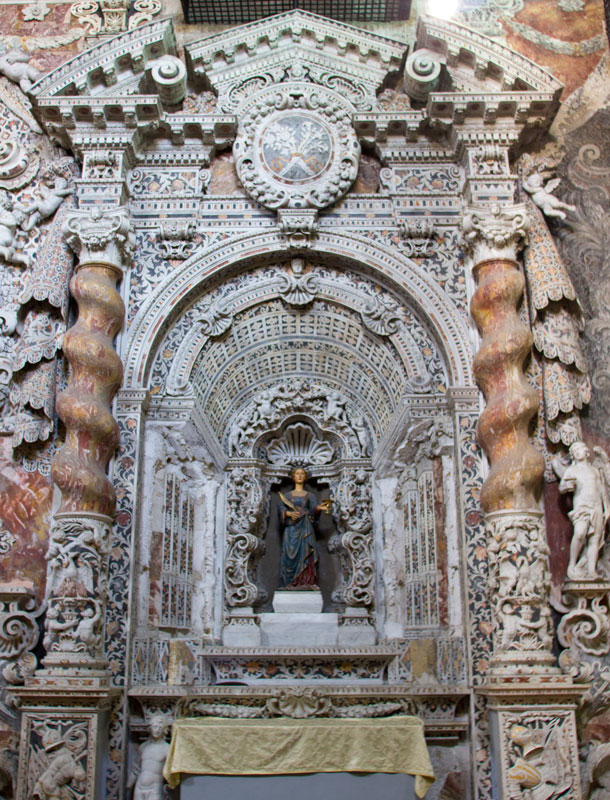
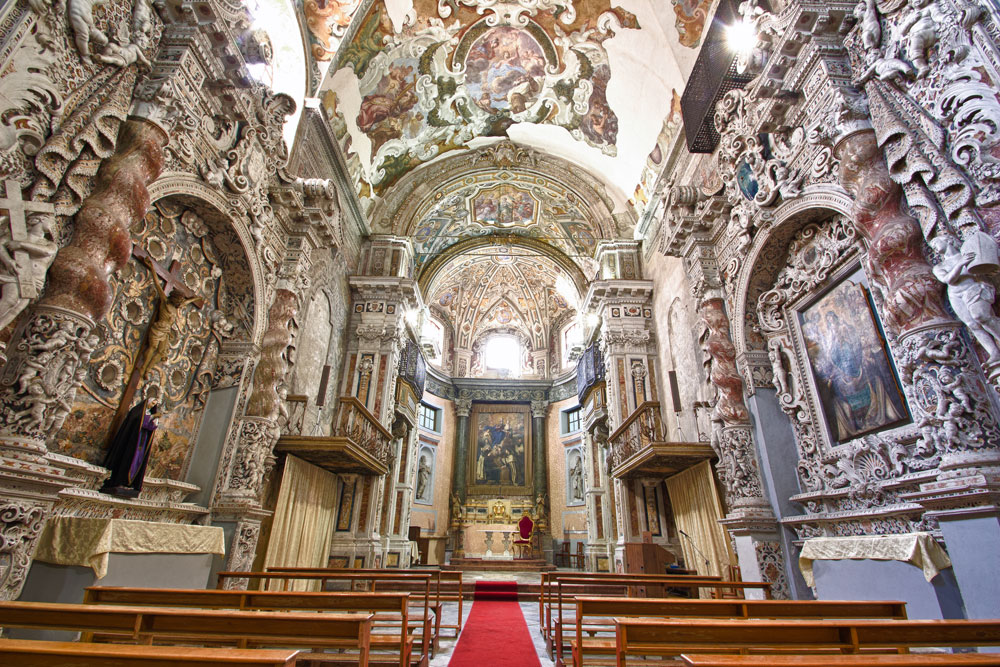
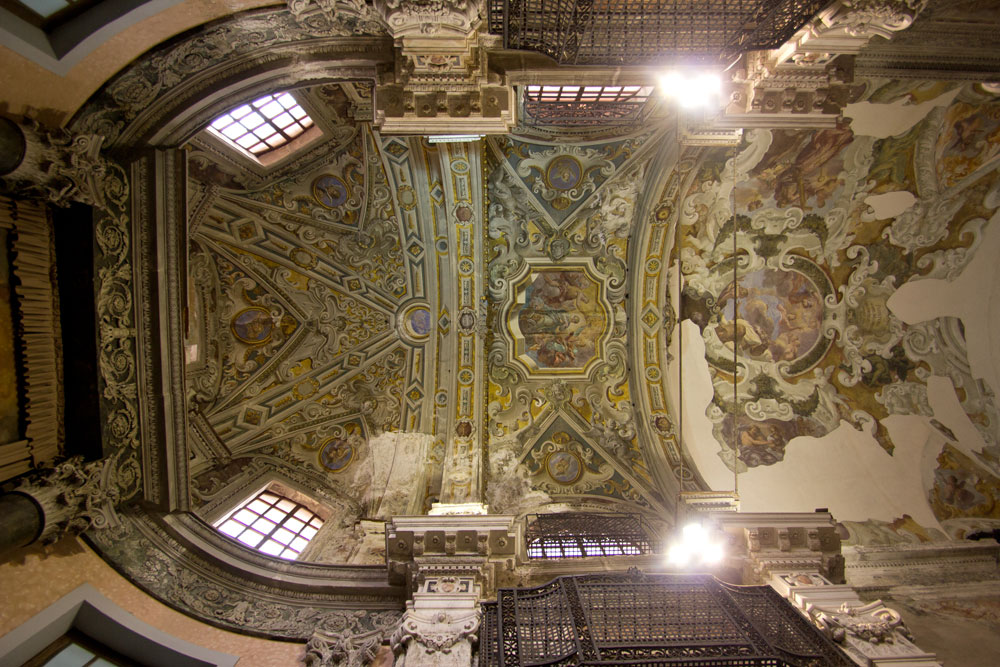
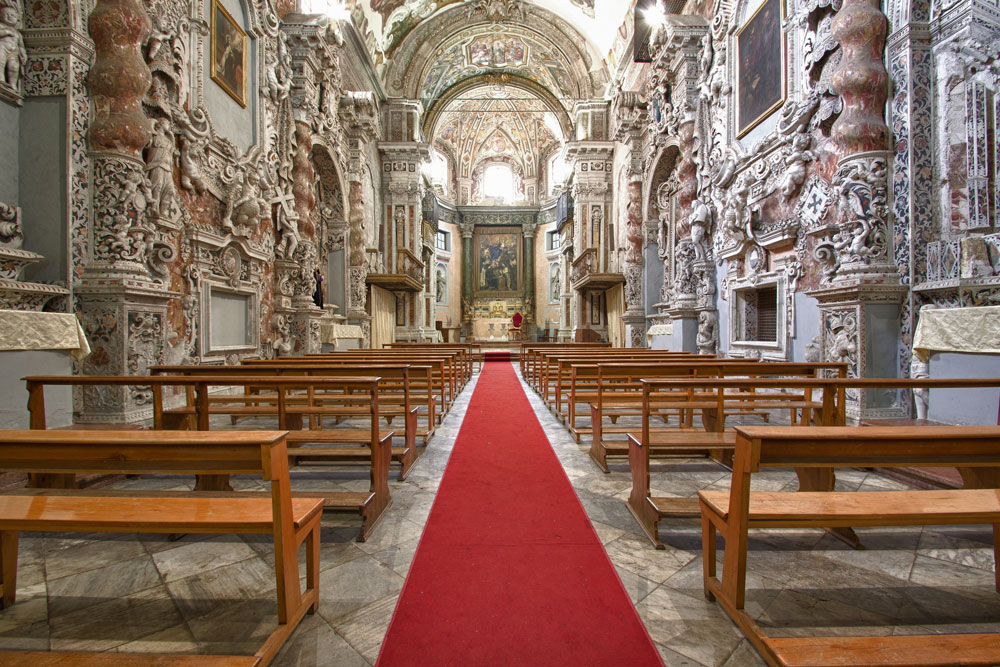
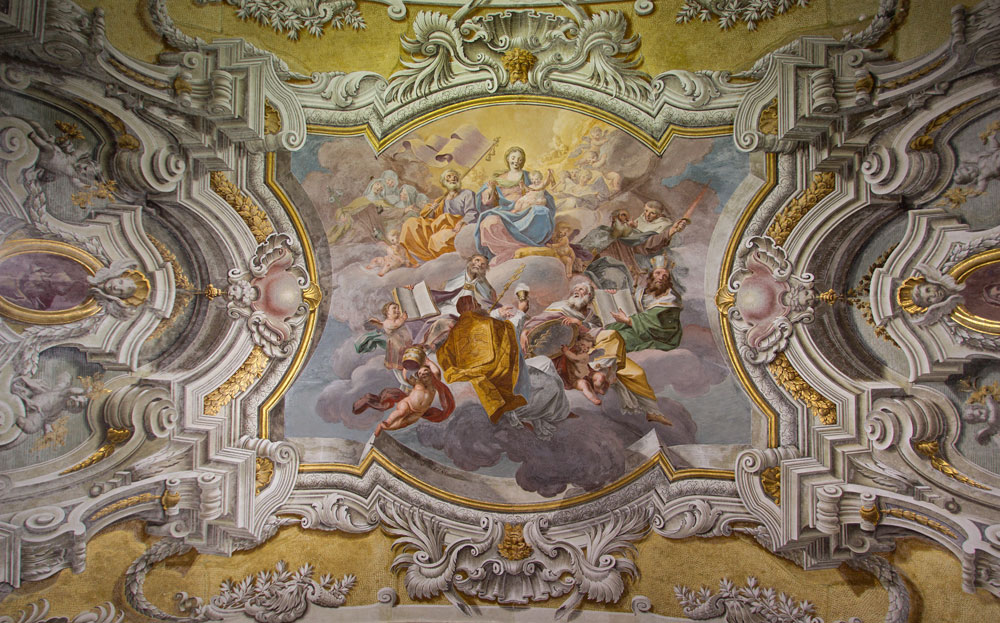
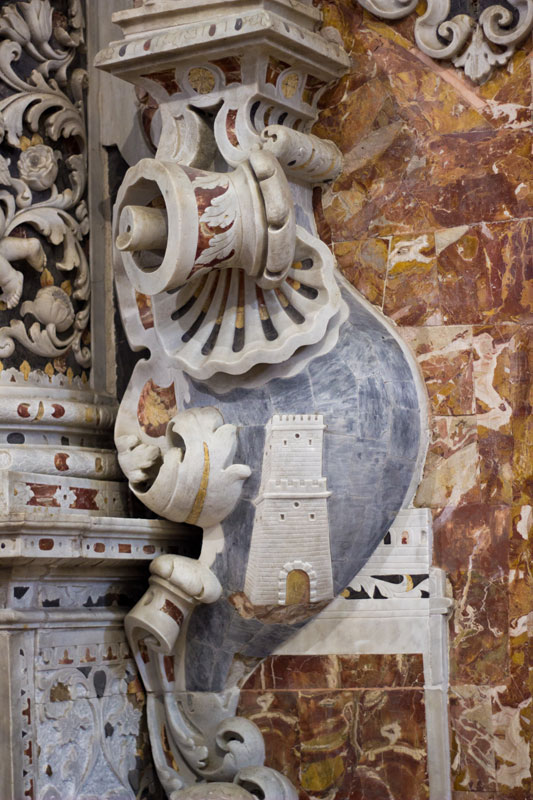
The interior of the church is a rectangular hall with a semicircular presbytery and a choir at the entrance supported by a large arch. The area beneath the choir was frescoed in 1750 by Olivio Sozzi, while the ceiling frescoes, now largely lost, are the work of Antonio Grano. The side walls feature four altars, richly decorated with mixed marbles; the most important one is dedicated to Santa Lucia.
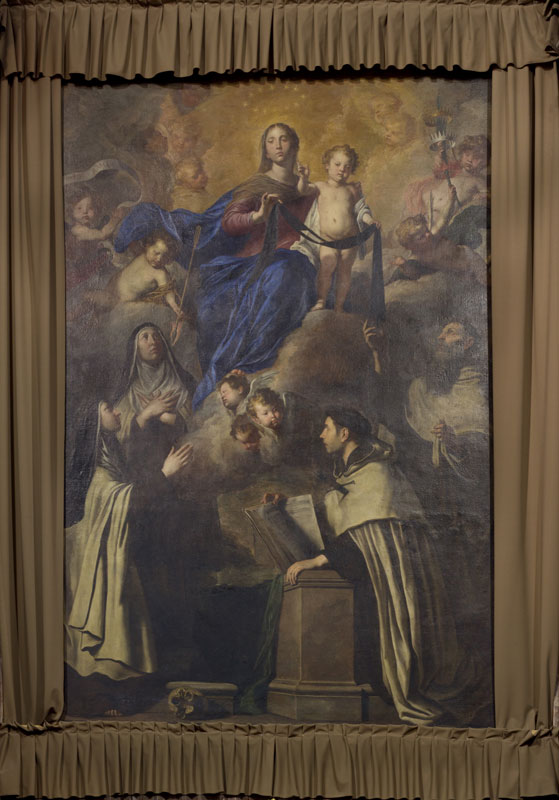
After the suppression of the conventual order in 1866, the church fell into disrepair, but it was reopened in 1872. Damaged during the last war, it was stripped of its furnishings. The first restoration efforts took place between 1979 and 1980. In 1997, the church was reopened for worship, and the altarpiece by Pietro Novelli, the Madonna del Carmelo with Saints Teresa of Ávila and Mary Magdalene dei Pazzi and the Blessed Albert and Angelo from Licata, was returned to the altar.
Where is Saint Mary in Valverde


Opening hours
Photo gallery